Selected work
Most Gliders are private, built for one organization and kept inside it. These are described without names, and each says how far along it is.
A research archive for a nonfiction book
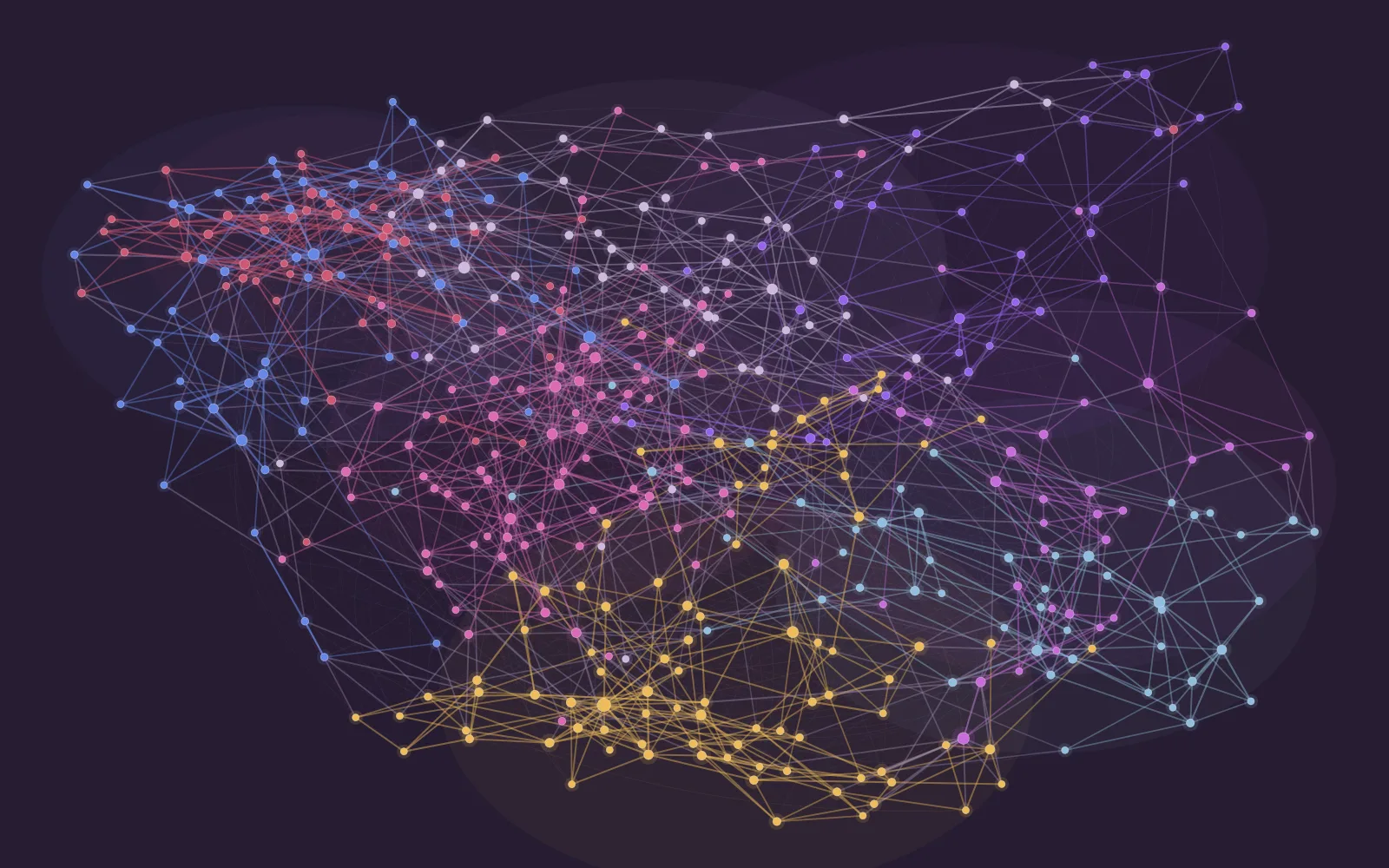
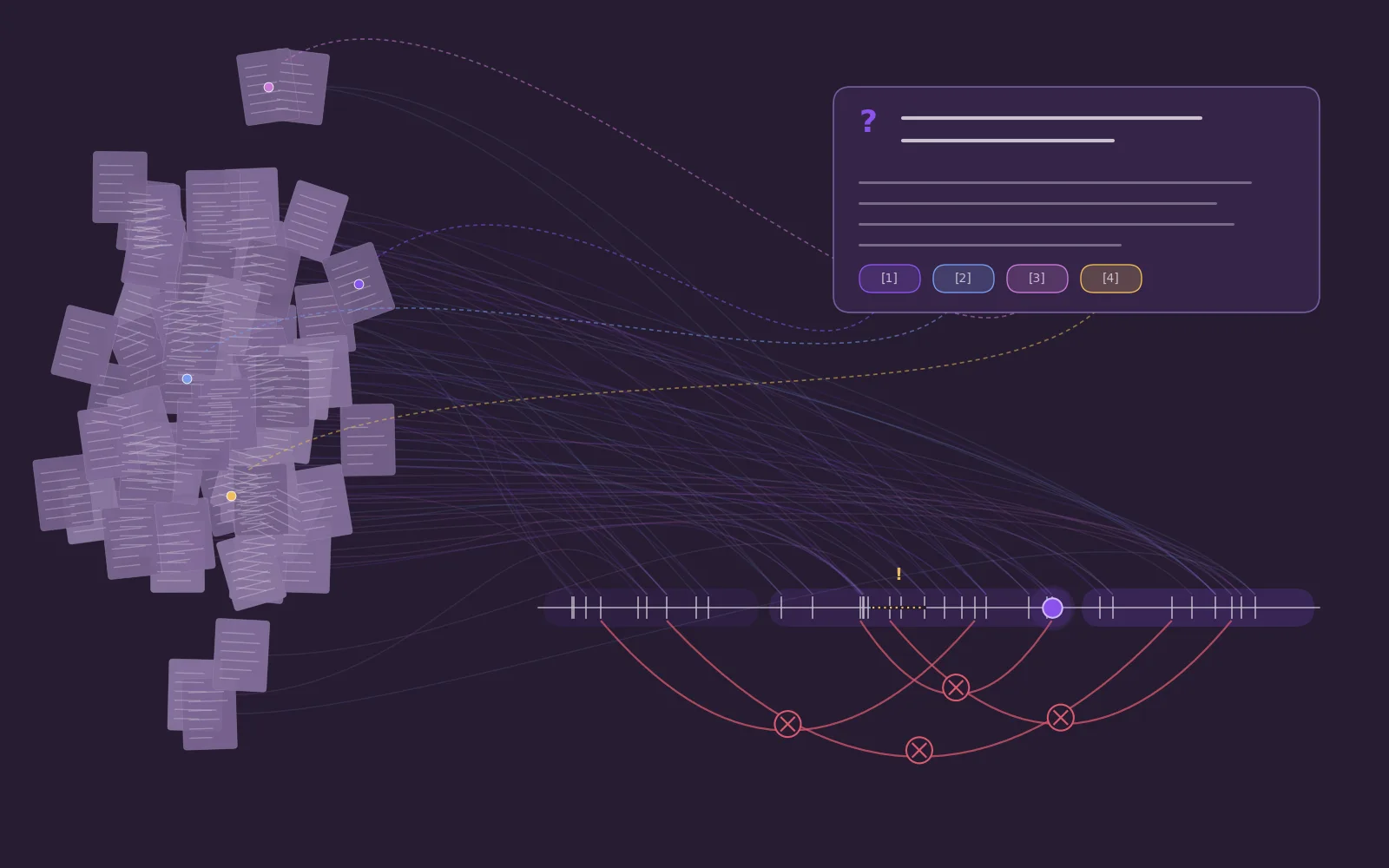
Built and in use.An author working through a large research archive for a narrative nonfiction book needed to see across about 100,000 pages of documents in English and Spanish. The Glider scans and translates them, builds timelines and person files, flags where sources contradict each other, and runs on the author's own computer.
The author can also talk to it. Ask "Which sources disagree about what happened, and where?" and the answer comes back with citations that open each source document. A draft check reads a paragraph of the author's own prose and flags every claim the archive does not support. New documents are made searchable first, and deeper analysis runs only on what the author picks, with the cost shown before it starts.
A map of a mentoring network
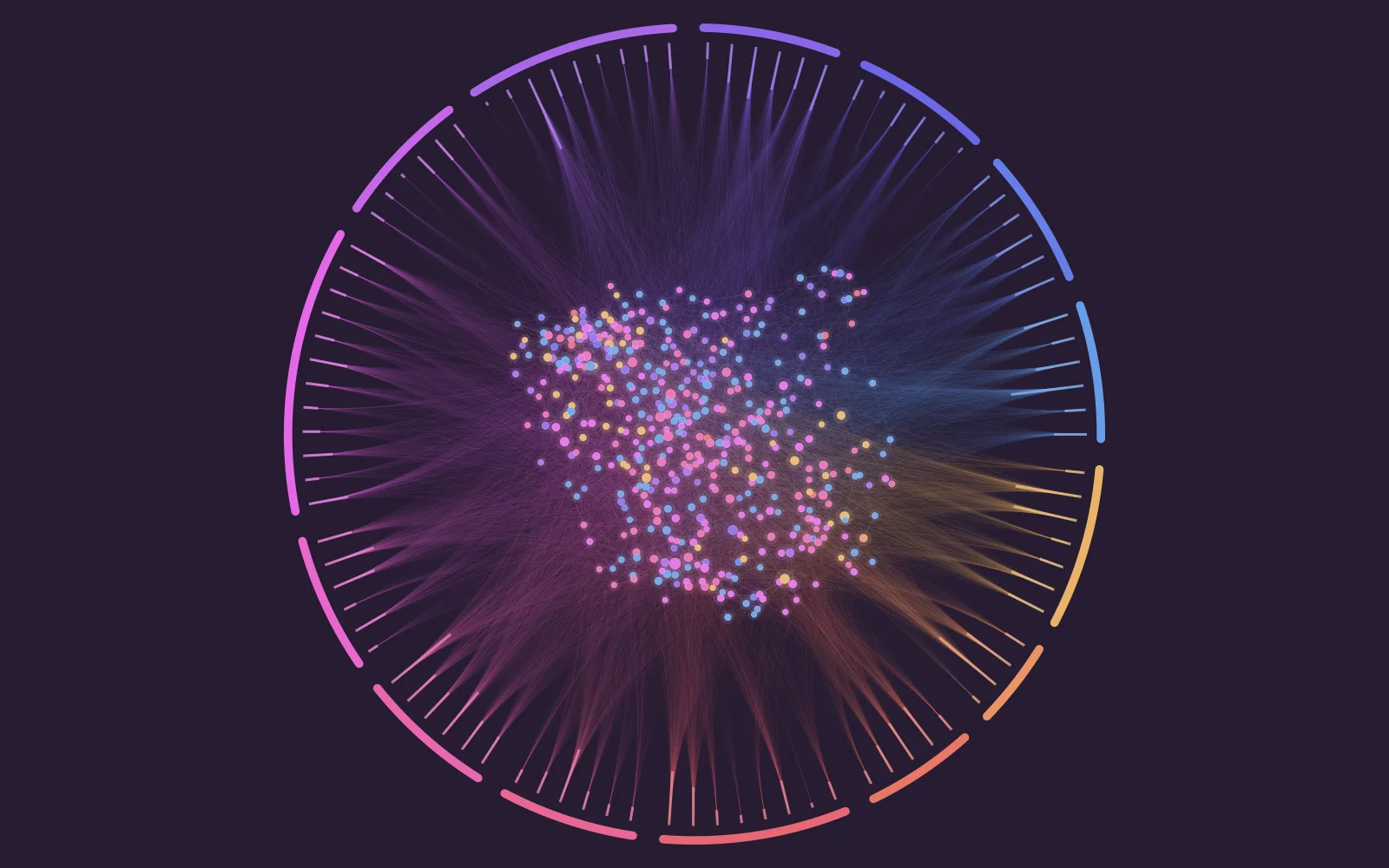
Built and in use.A mentoring network wanted to see who could work well with whom. Each of its 459 people is described by expertise, by how they like to collaborate, and by how they engage, and organizers explore the network on a private site.
Fourteen lenses describe each person, from expertise and career stage to what they can offer, and 178 coded dimensions shape the map. Organizers can see who is most alike, who could learn from whom, who would complete a group, and where the network has gaps. They can also turn the whole community in a three-dimensional view.
Comparing national AI laws
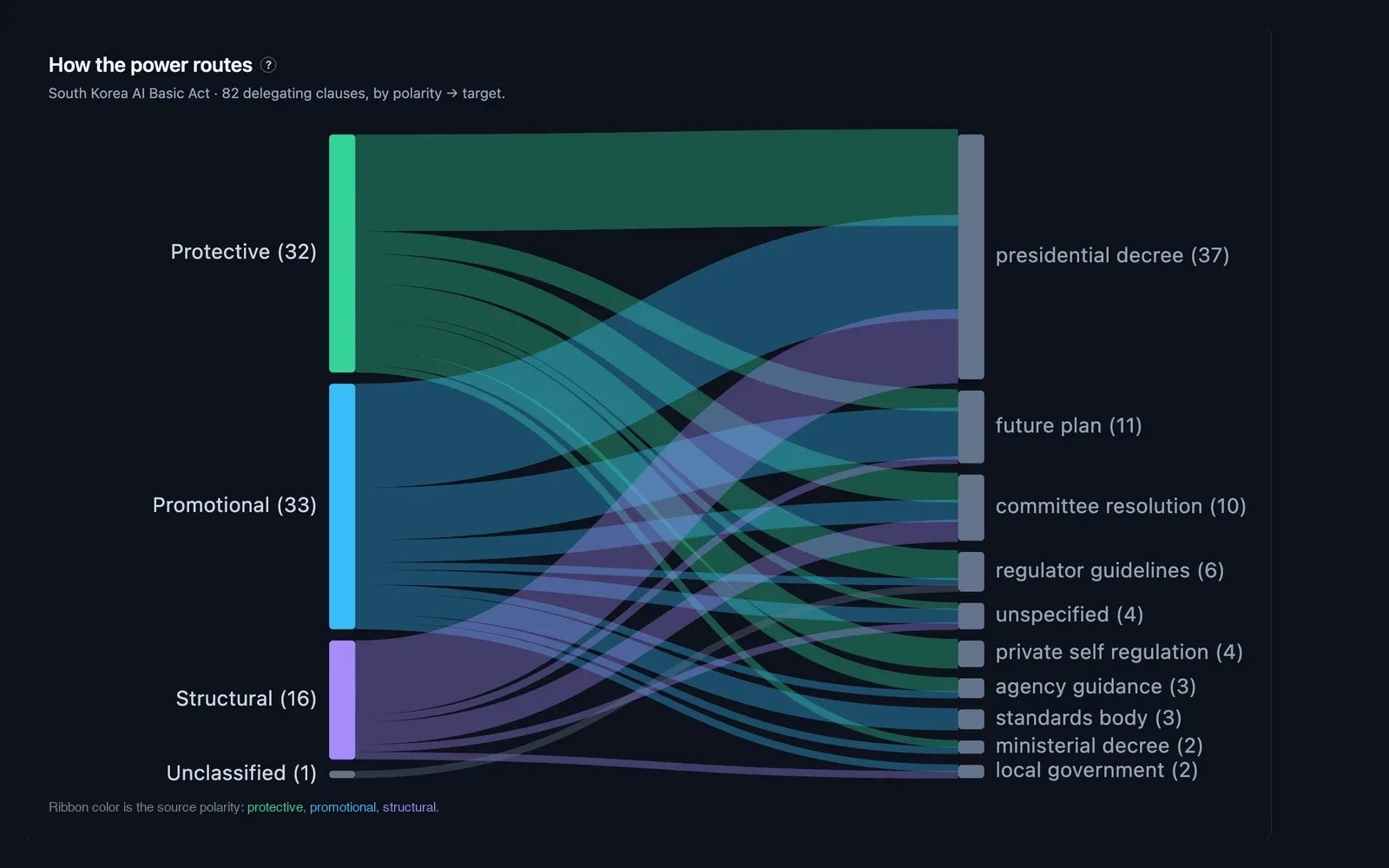
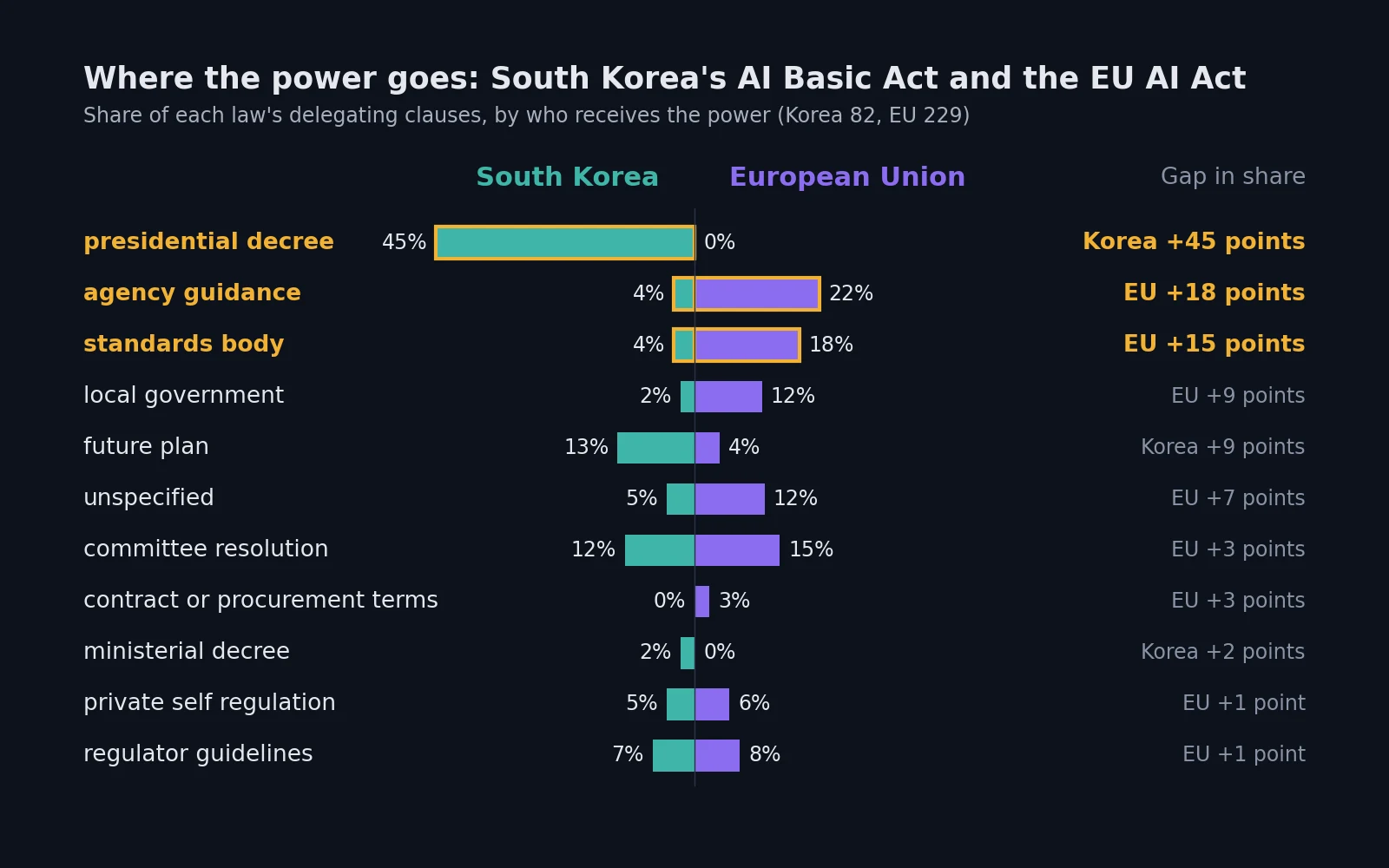
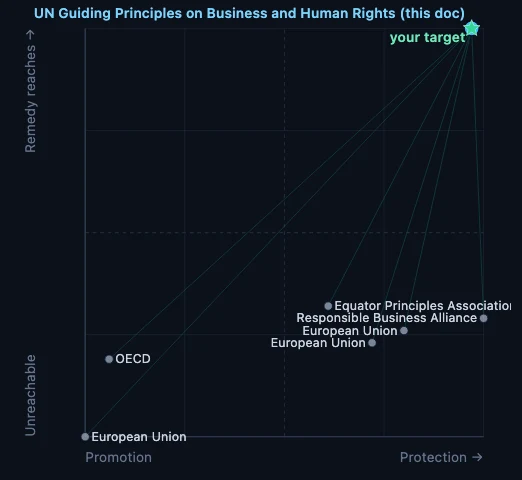
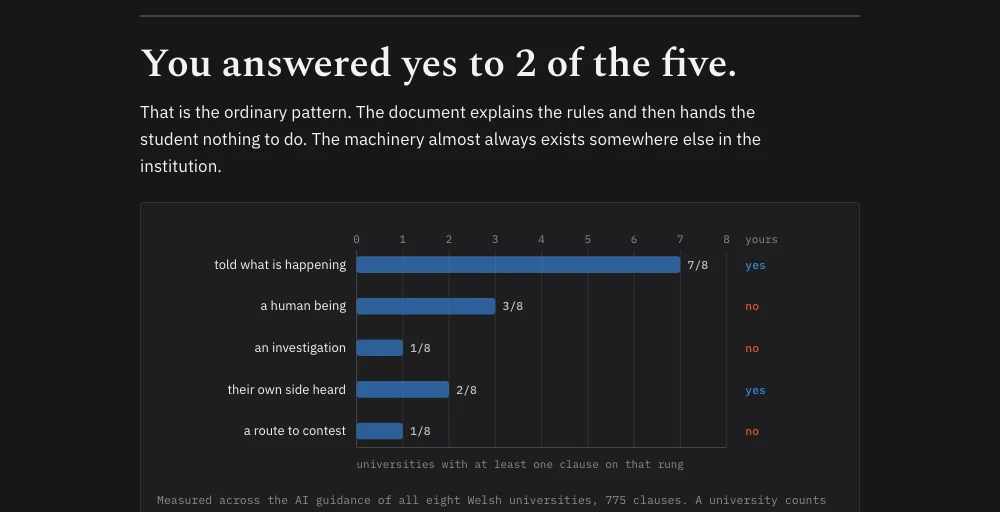
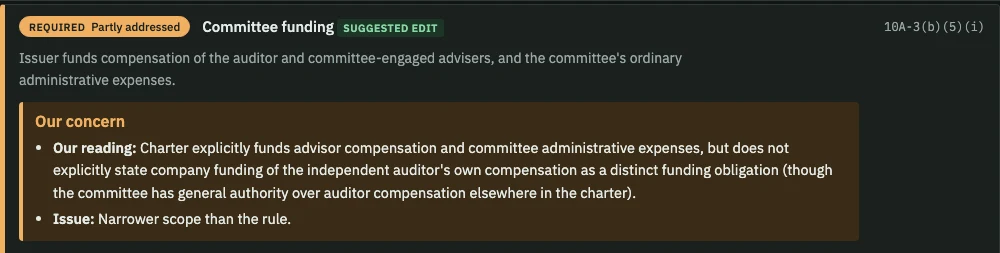
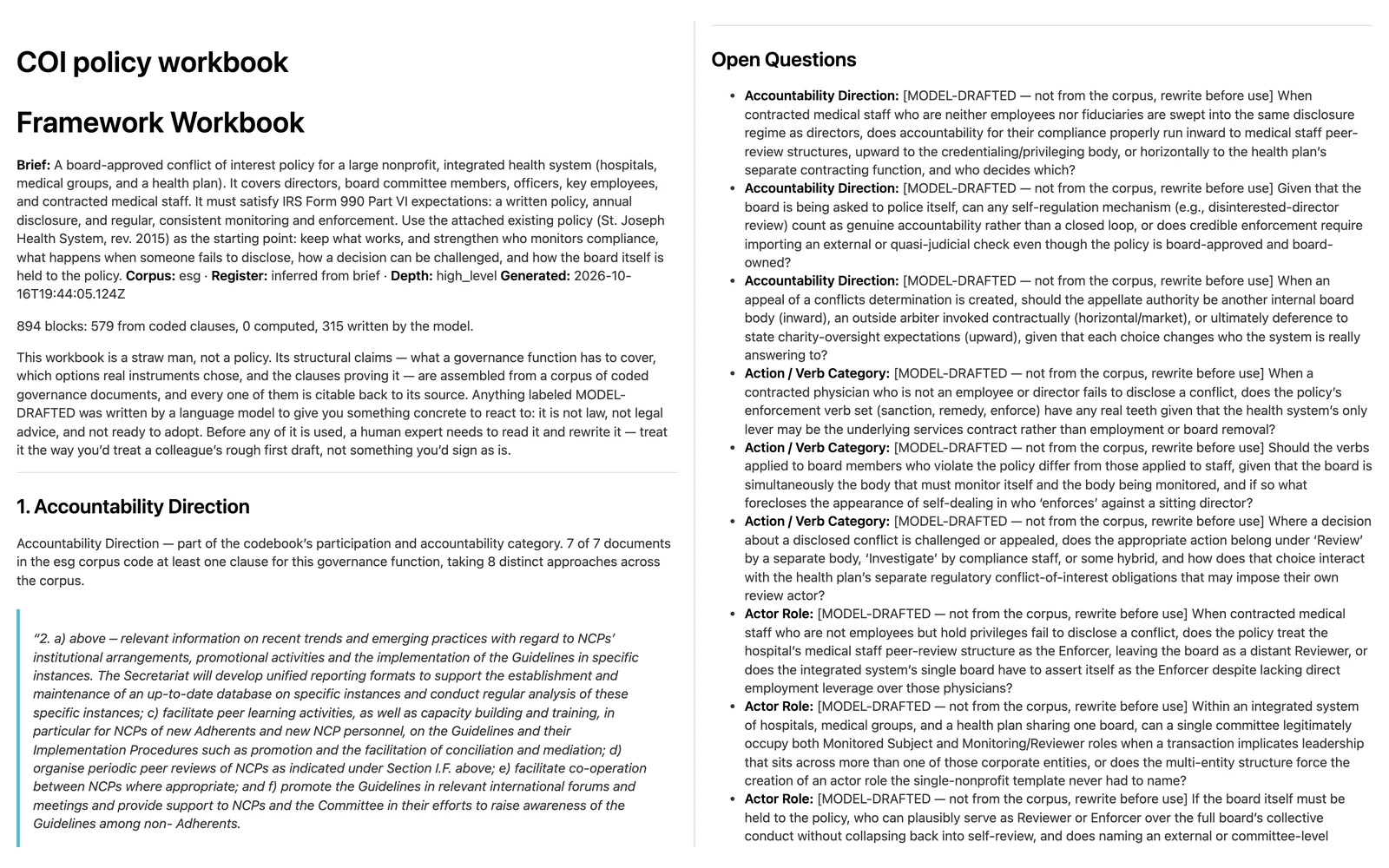
Built and in use.A policy group wanted to compare national AI laws clause by clause. The Glider splits each law into clauses, codes who each clause empowers, burdens, protects, or leaves out, and backs every code with a quote from the text.
It has coded 23 governance documents so far, from the EU AI Act and South Korea's AI Basic Act to climate disclosure rules and the UN Guiding Principles on Business and Human Rights: 8,619 clauses and 344,010 codes across 47 dimensions. One view follows delegation, the clauses that leave their substance to a later decree, standard, or committee, and shows who ends up holding that power. The codes are assigned by a model and marked for review by experts.
A melody archive for composers
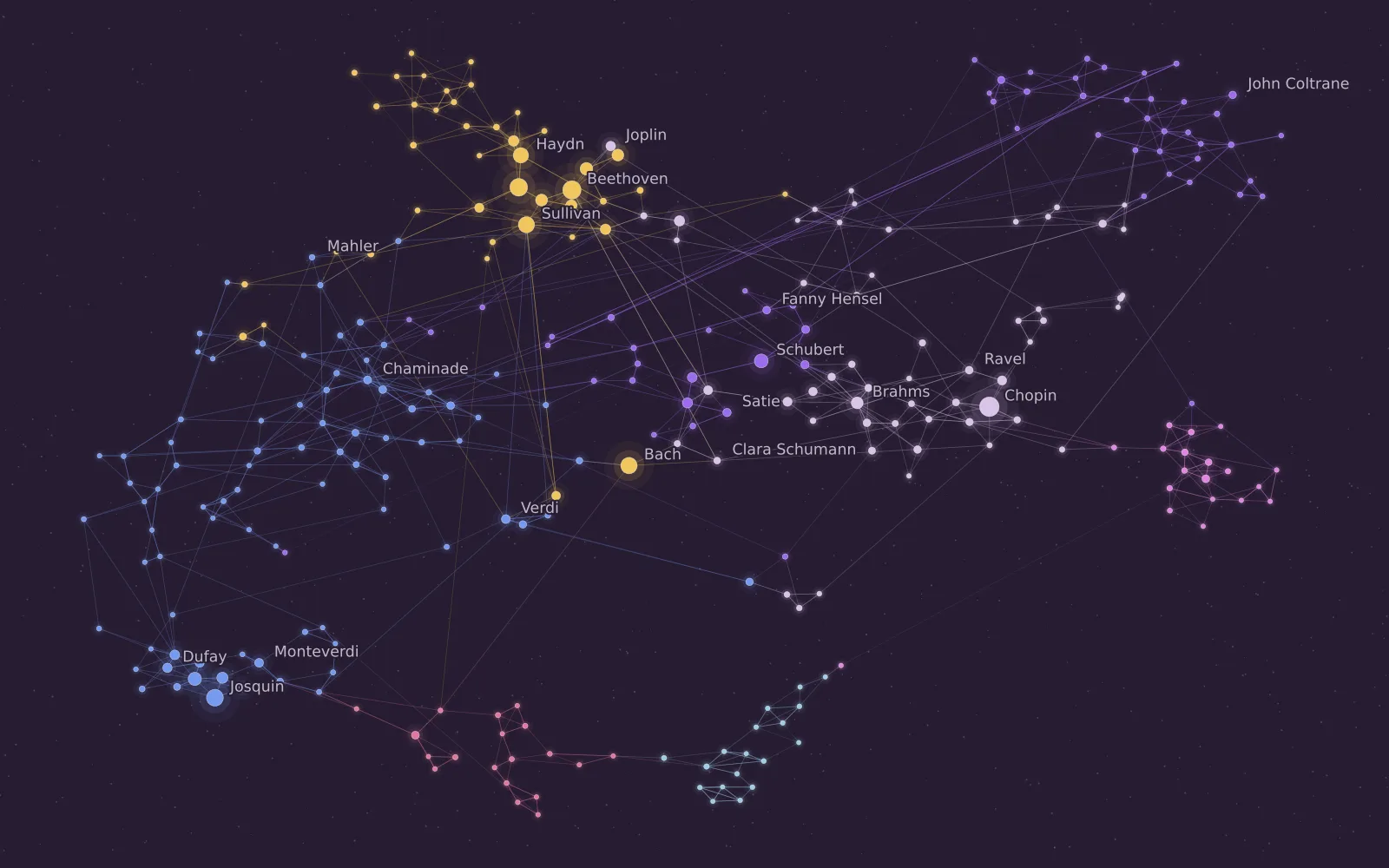
Working prototype.A prototype for composers that finds where else music makes the same move. It reads scores, splits 13,295 works into 218,627 phrases, and tags what each phrase does. It groups 44,728 recurring melodic shapes, and it can name a famous theme from a melody someone types in, drawing on a library of 2,067 themes.
-
Printed archives, searchable and connected
Building for a client.A university library wants a century of its bulletins and magazines searchable and connected, and working previews have been built from the early printed records of two colleges approaching anniversaries. Each one lets a reader find a name across every issue, read what happened on this day a century ago, and follow a building or a tradition across decades.