Reunion Gliders
A private website for a reunion, built from the years people shared
For a college class’s 25th or 50th, a family, a team, or a unit, we build a site for one group from its own yearbooks, newspapers, newsletters, and photographs. People find their years together again, say they might come, and reach the friends they would travel to see. The organizers see what is working, week by week.
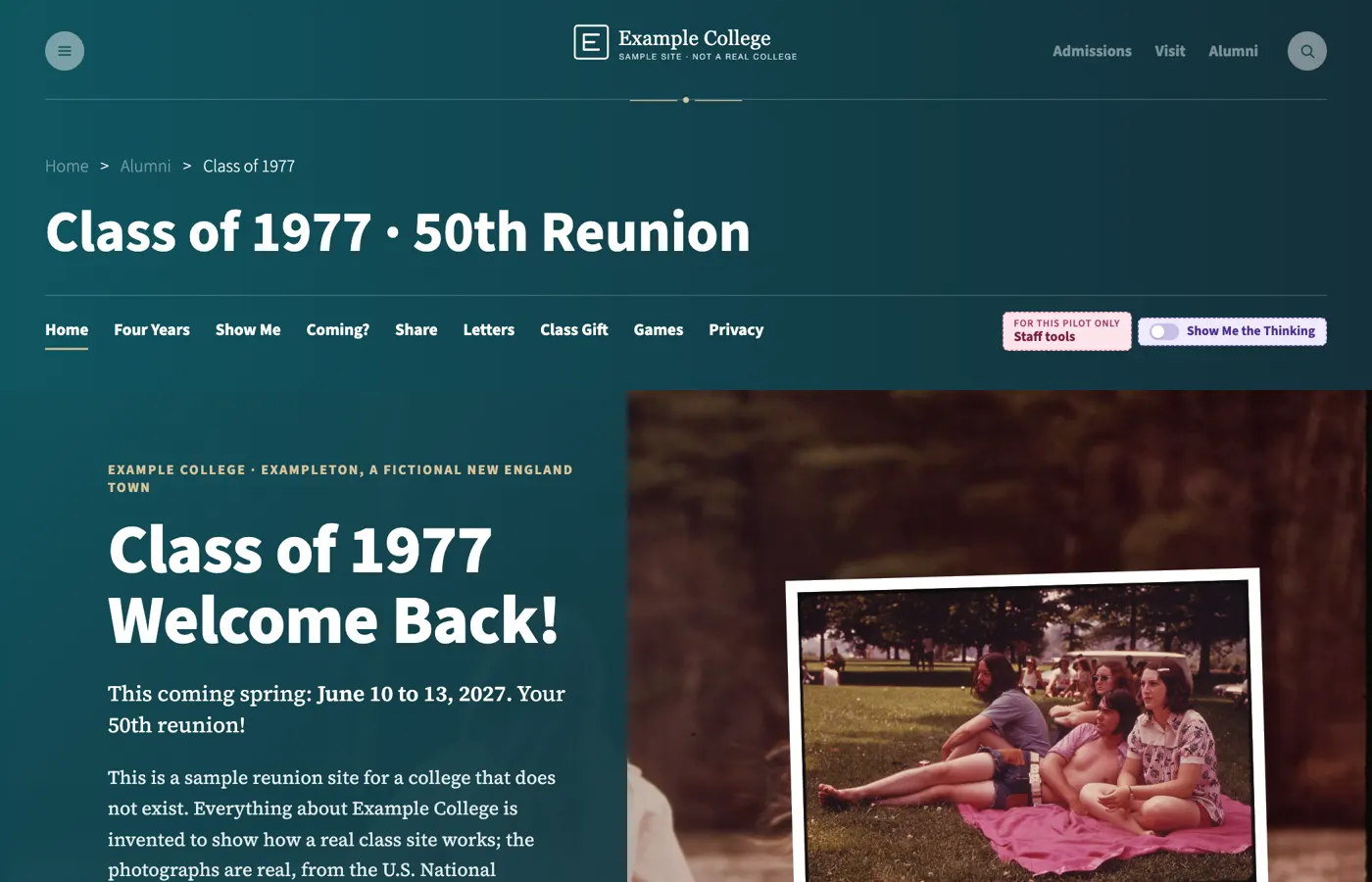
The home page of a sample class site, with photographs from the class’s own years.
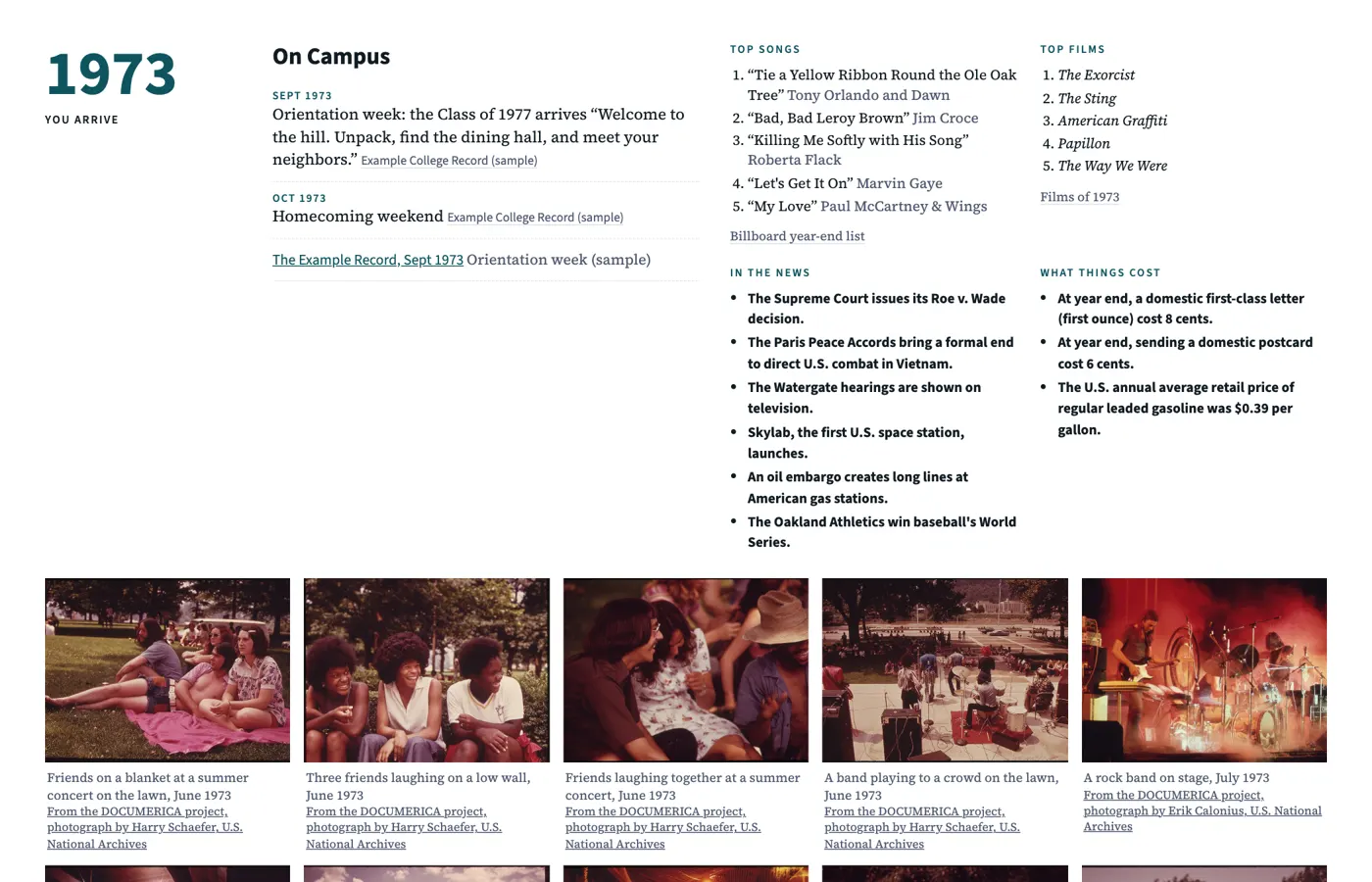
Your four years: each year on campus, beside the songs, films, news, and prices of the time.
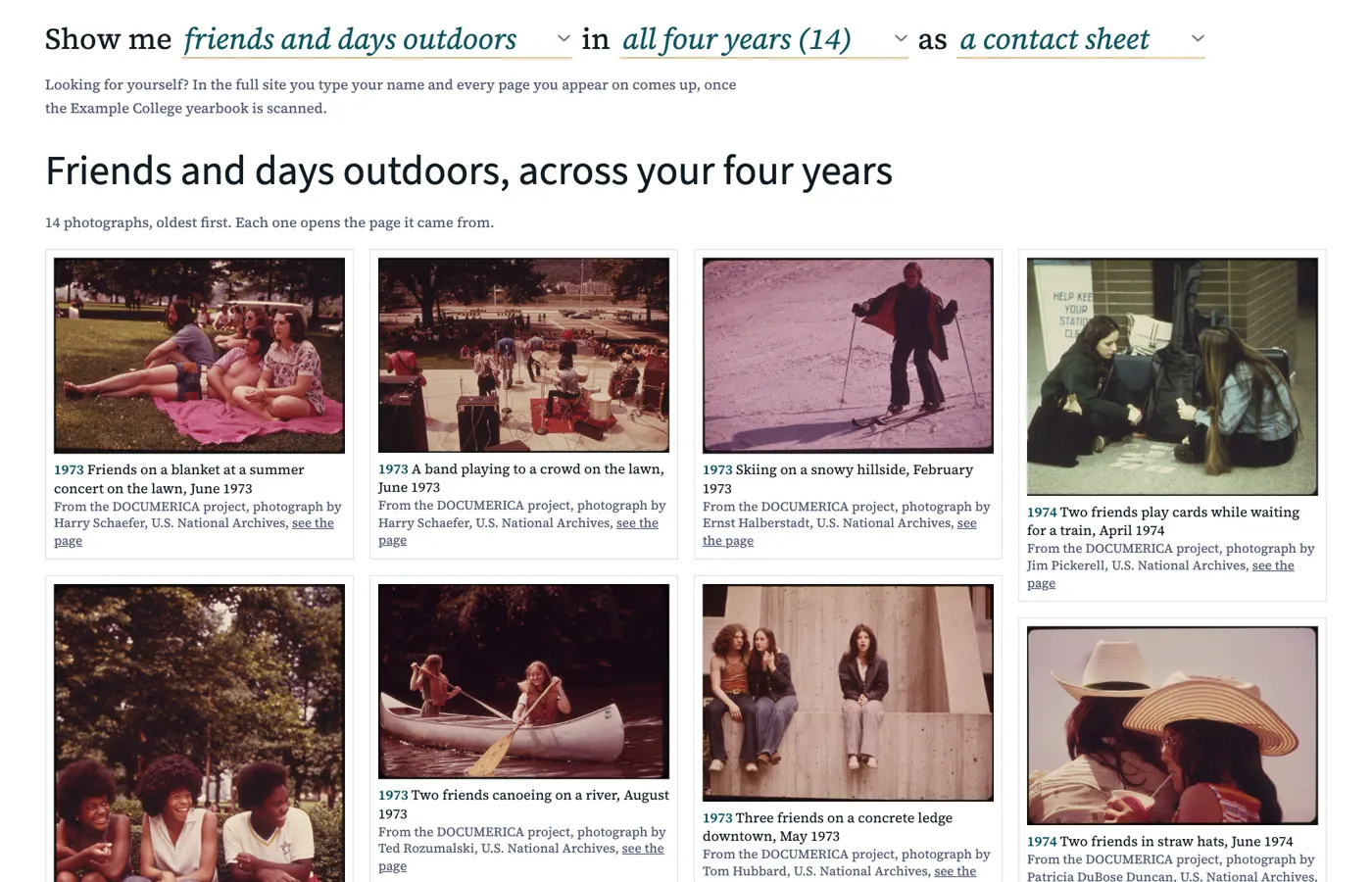
Show me: pick a subject and a year, and the site puts the photographs together.
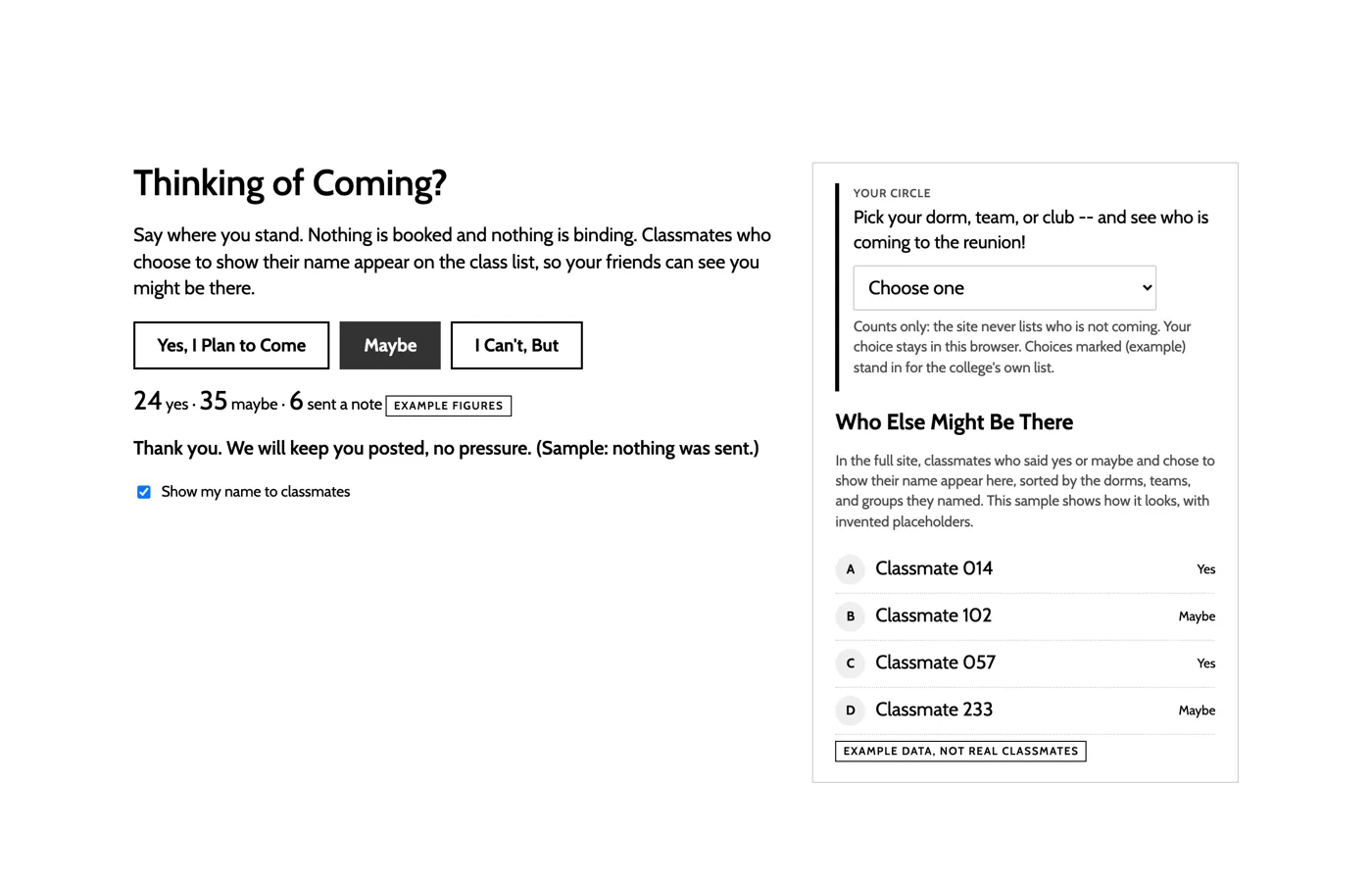
Thinking of coming? One tap says maybe, and classmates see who from their dorm, team, or club might come.
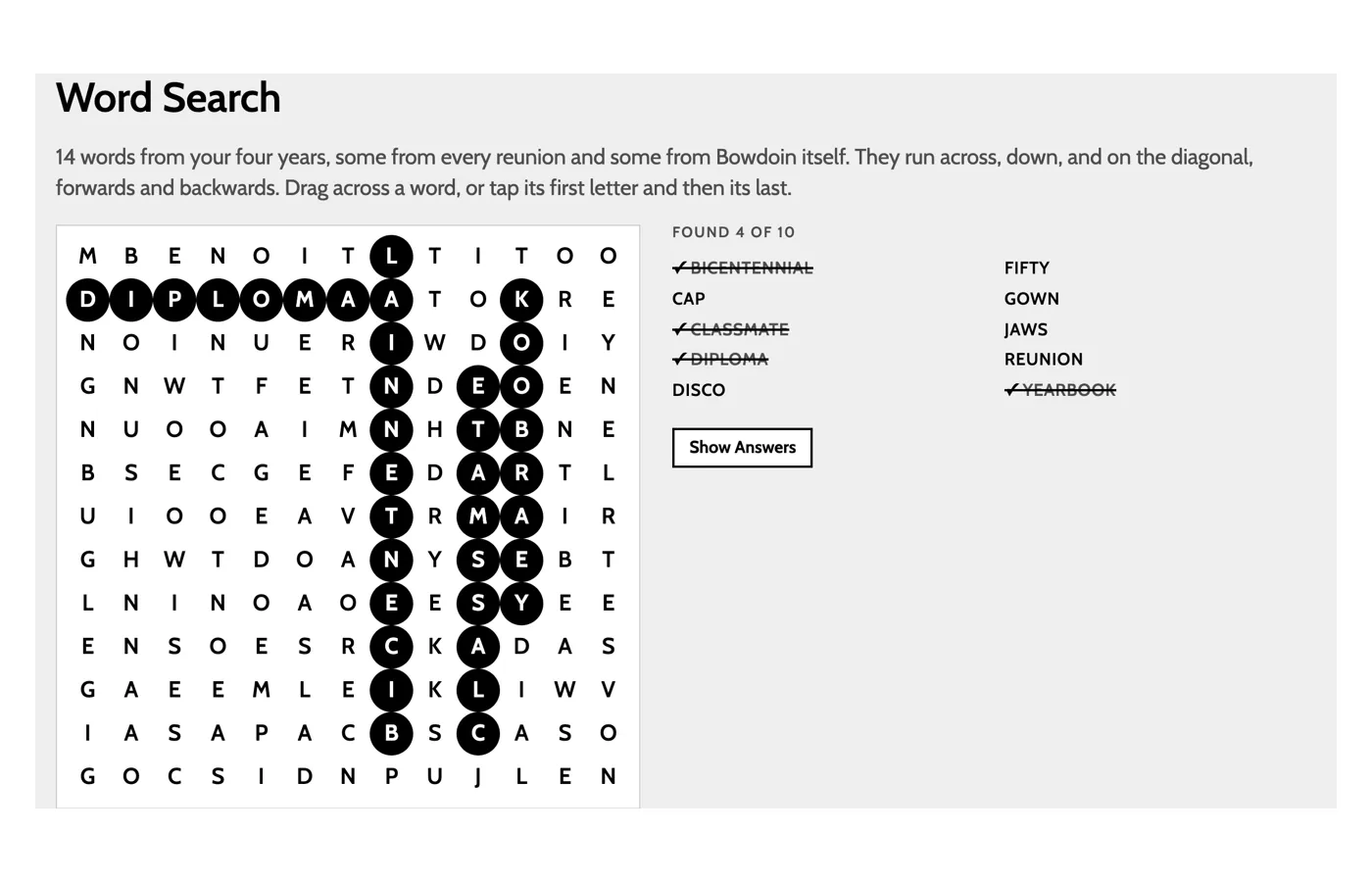
Games built from the class’s own years: a word search, a crossword, and quick quizzes.
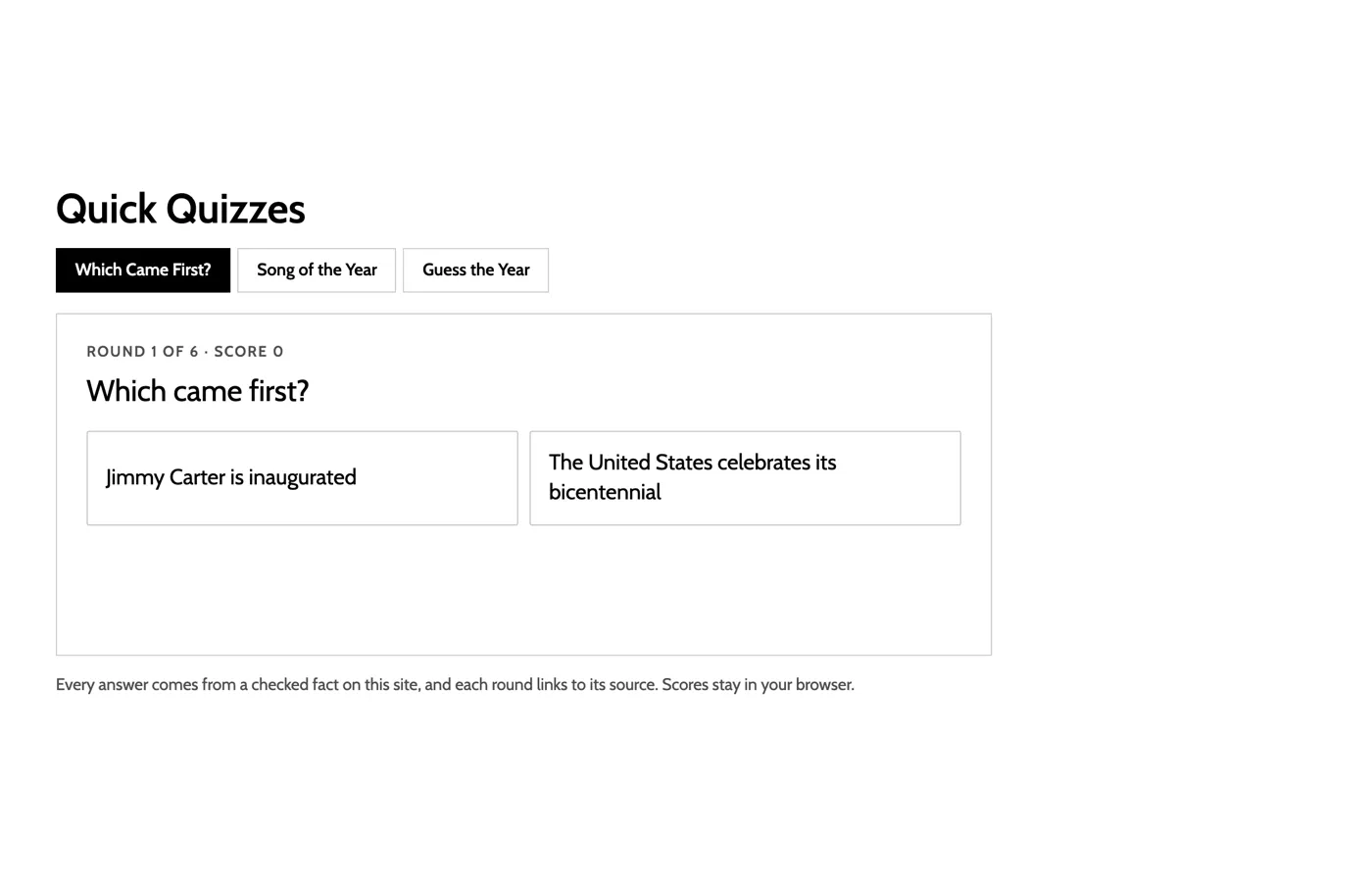
Which came first? A quiz on the class’s four years, on campus and in the world.
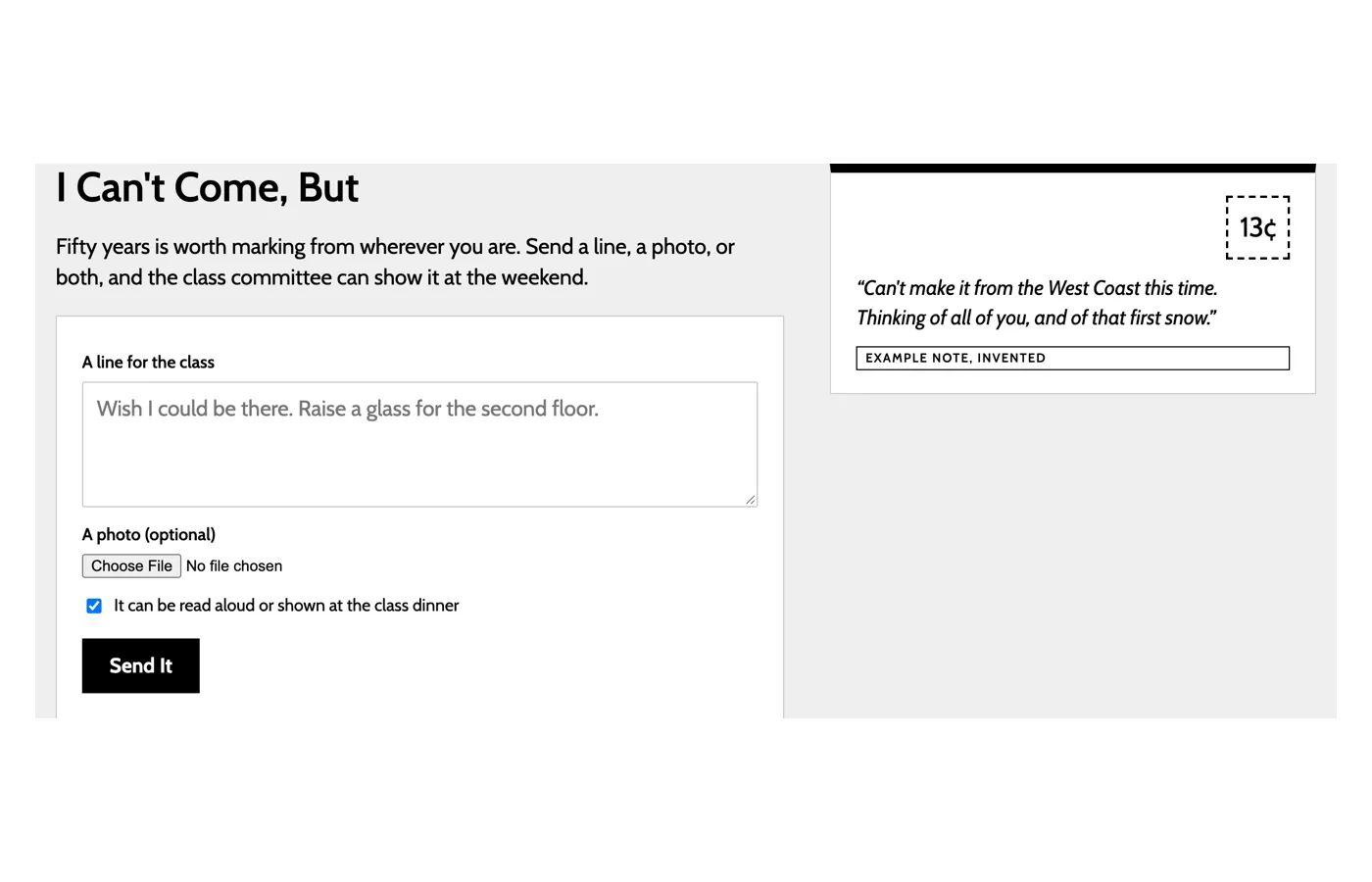
I can’t come, but: a note or a photo to be read or shown at the weekend.
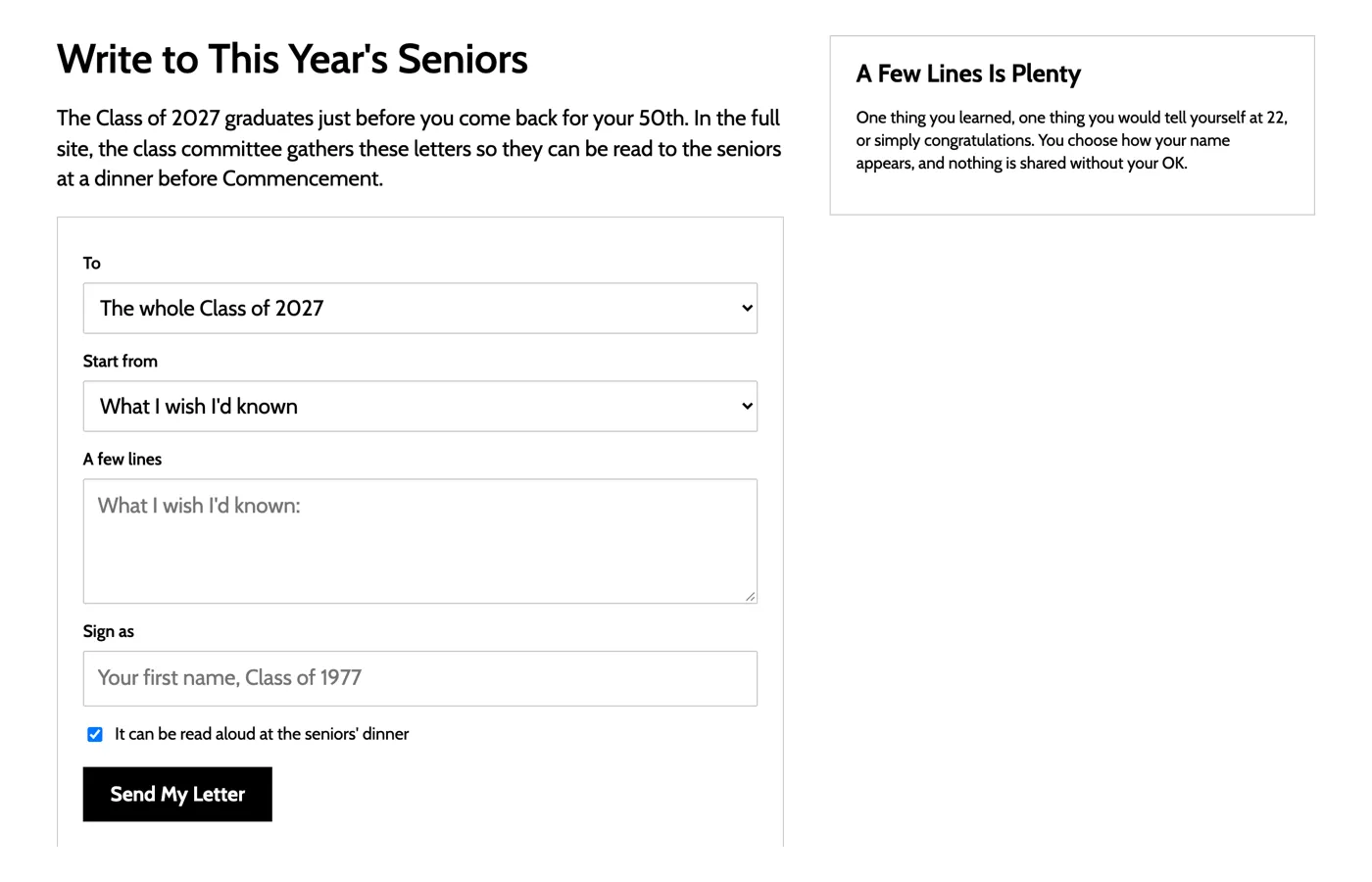
A letter to this year’s seniors, read at a dinner before Commencement.
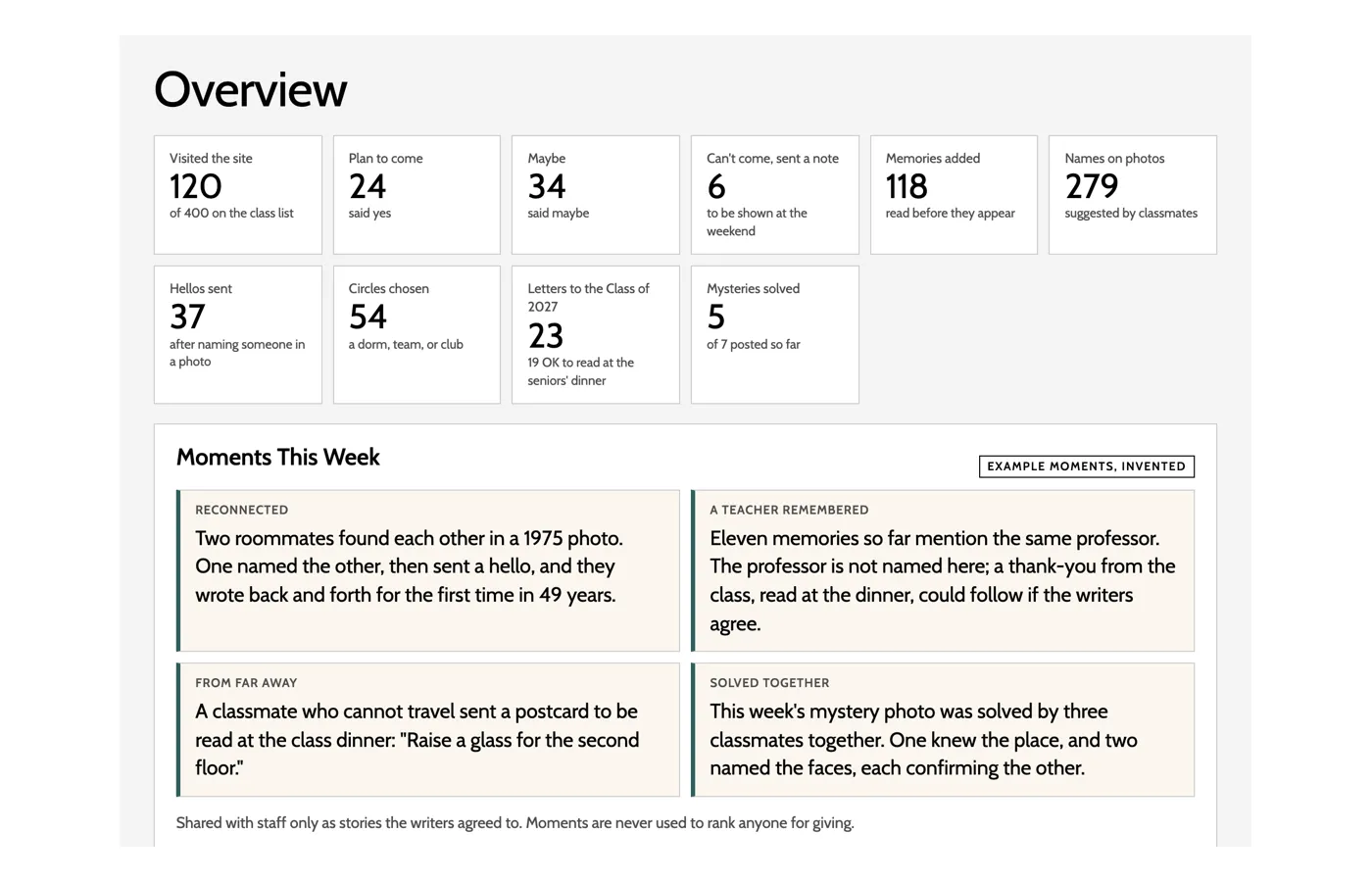
The staff overview: who might come, memories, names, hellos, and moments from the week.
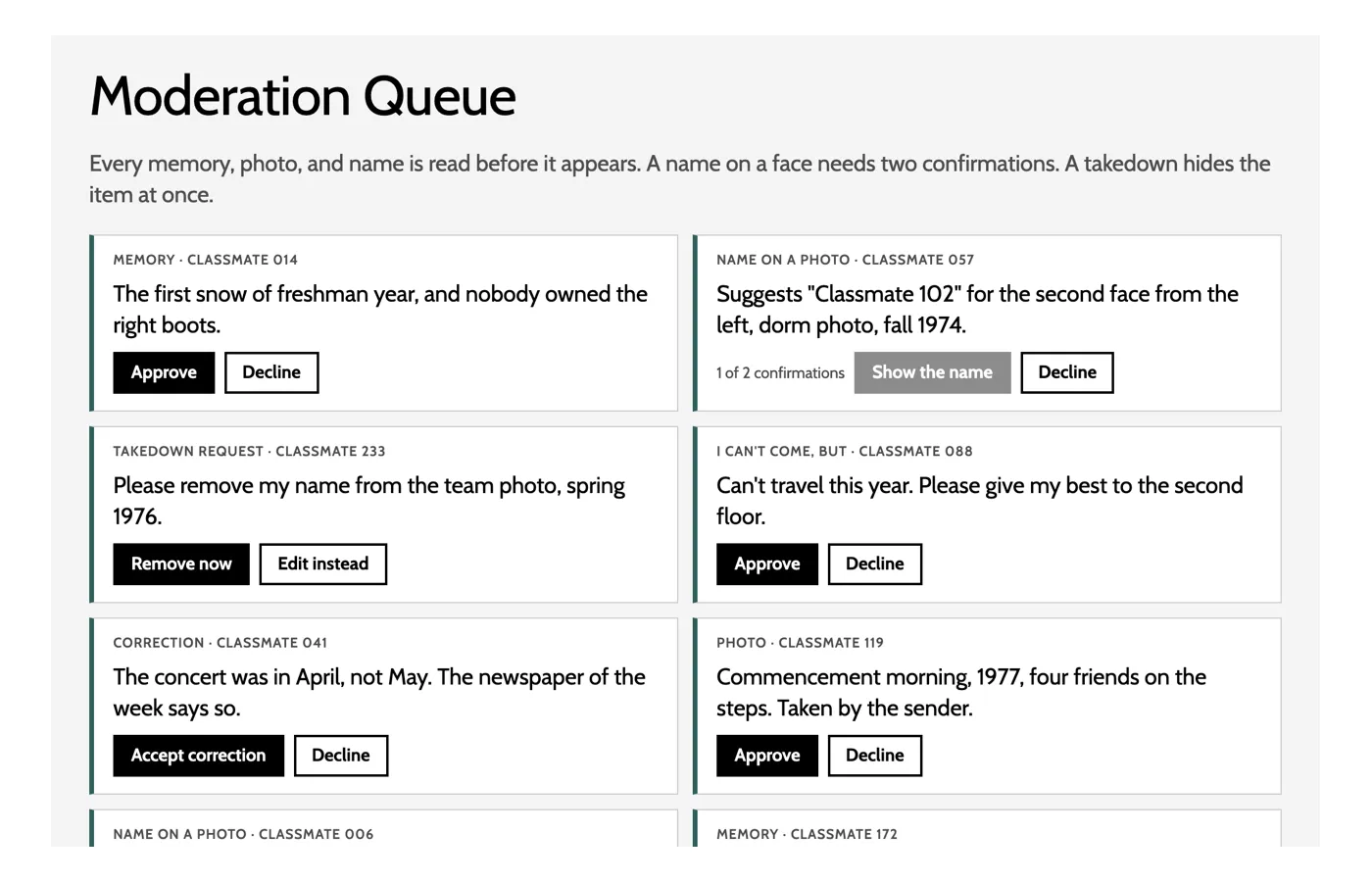
Every memory, photo, and name is read before it appears.
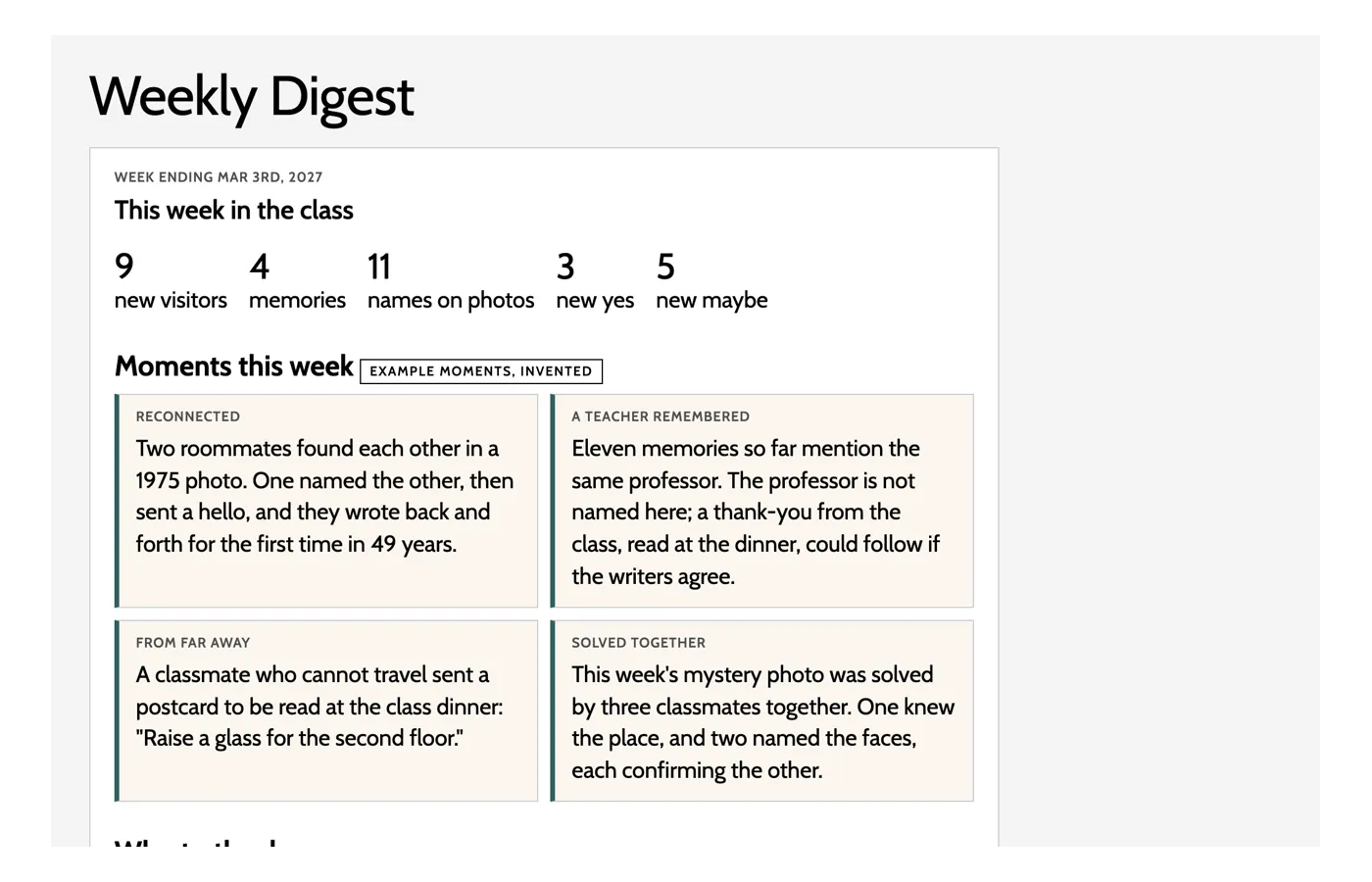
A weekly digest for the reunion committee, ready to send.
What the class sees
Here is a college class’s site, as our samples build it. Each one is made for one class and looks like a page of the college’s own alumni site. Tap any photo or story to see the original page, just as it was printed.
Your four years
Each year as the college’s own magazine or paper reported it, beside the songs, films, headlines, and prices of the time.
Show me
Pick a subject and a year (Winter Carnival in 1975, the river, Commencement), and the site puts together a slideshow or a contact sheet from the archive.
Thinking of coming?
One tap says “maybe.” Classmates see how many from their dorm, team, or club might come, as counts, never as a list of who is missing.
I can’t come, but
A note or a photo to be read or shown at the weekend, so classmates who cannot travel are still part of it.
Name the people in a photo
Tap a face and type a name. A name appears once a second classmate agrees, and naming an old friend comes with a way to say hello.
A letter to the seniors
A few lines from the reunion class to the class graduating that spring, read at a dinner before Commencement.
Your teachers, games, and a mystery photo
The professors and coaches of those years, word searches and a crossword built from the class’s own history, and one unnamed photo each week for the class to place.
The class gift, as people
How many classmates have joined the gift, never how much anyone gave, with the college’s own giving page one step away.
See it working
Two short movies of a complete sample site, for “Example College,” a college we made up so the site could be shown in public. The photographs are real public-domain pictures from 1973 to 1975, from the U.S. National Archives. The movies are silent; captions along the bottom explain each step.
What the reunion and giving teams see
Behind the class site sit tools for the staff and volunteers running the reunion. Classmates never see them.
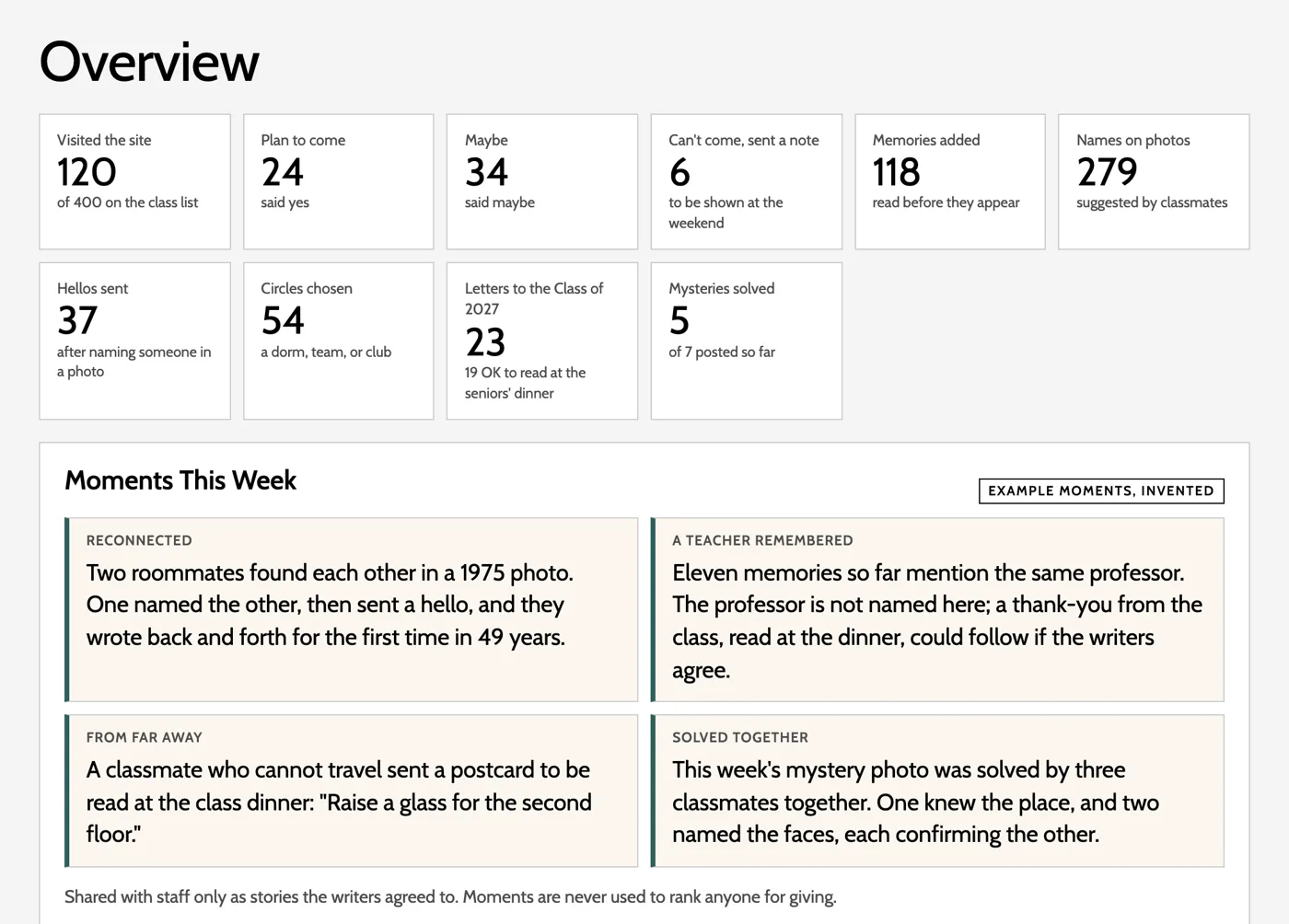
Who might come
Yes, maybe, and “I can’t, but,” by dorm, team, club, and region.
Outreach lists
Classmates who agreed to be contacted, grouped for a volunteer to write to, with a reason to write each month.
A moderation queue
Every memory, photo, and name is read before it appears, and a takedown request hides an item at once.
A weekly digest and a goal tracker
Moments worth sharing, and progress toward the class’s participation goal, counted in people.
Built on how people remember and reconnect
Each feature starts from what psychology and cognitive science know about memory, belonging, and motivation: what brings a memory back, what makes someone want to reach out after decades, why one invitation lands and another is ignored, and how a group comes to feel like a group again. James Intriligator trained in perception and cognition at Harvard, then spent fifteen years at Bangor University, where he became Professor of Innovation and Consumer Psychology. Each design choice on a reunion site is checked against that research.
A few examples. Fifty years on, many people travel to see a handful of friends, so counts start with a visitor’s own dorm, team, or club. Songs, prices, and headlines from someone’s early twenties come back more easily than any other years, so each year opens with them. Finding your own photo is one choice away, because material about yourself holds attention. And a mystery photo brings people back without anyone asking them to.
The human side gets the same care. Rev. Dr. Susanne Skubik Intriligator, who has studied at graduate level how groups take root and stay together, in person and online, advises on what each site should feel like to the people who use it.
It is designed to be kind as well as effective: counts, never lists of who is missing; consent before any name appears; takedowns at any time; and nothing that ranks anyone for giving. Our samples carry a “Show me the thinking” switch that explains the research behind each feature, for the people deciding whether to use it.
Not only college classes
The same site works for any group with years behind it: a high school class, a family, a sports team, a choir or a band, a military unit or a ship’s crew, a summer camp, or the alumni of a company. A family reunion draws on the family’s own photographs and letters, and on the local paper from the years that matter to them. A unit’s or a crew’s draws on its records and on what its members send in. The heart of it stays the same: your years together, who might come, a note from those who cannot, and photos for everyone to name.
Request a private walkthrough
See a complete site for a real class, built from a college’s own archive, with James taking you through it. Or ask for a sample built for your own class or group.
James reads every request himself. Your details are used only to reply to you and to send your link, and they are never shared. Ask at any time and we delete them.
How it starts
We begin with a private sample, built from material that is already published. A college sees one of its reunion classes, in its own look, before deciding anything; a family or another group sees its own years from what it can share with us. A full build then takes in the archive with its owner’s permission, and the photos and stories people add.
Reunion Gliders grew out of our Anniversary Gliders, which make a whole institution’s printed history searchable for a milestone anniversary.
Write to james@gliderinnovations.com with the group and the reunion date. James will reply himself.